

Special Purpose Vehicle Finance
Understanding SPV Project Finance and Investment Structuring
Businesses, project sponsors, infrastructure developers, and investors may use special purpose vehicle finance to structure complex projects, allocate financial responsibilities, and establish clear ownership arrangements. Depending on the project, an SPV may obtain funding through equity contributions, commercial loans, private investment, or other financing arrangements subject to lender requirements and applicable regulations.
At SBLC Providers, understanding the role of SPVs can help businesses explore financial structuring options, evaluate project requirements, and identify the documentation and due diligence needed before proceeding with a financing transaction.
What Is Special Purpose Vehicle Finance?
Special purpose vehicle finance refers to funding arrangements structured through a separate legal entity created to undertake a particular project, investment, or financial activity. The SPV generally operates according to its incorporation documents, contractual obligations, ownership arrangements, and applicable legal requirements.
Unlike financing arranged directly through an operating company, an SPV may allow a specific project’s assets, revenues, expenses, and financing obligations to be recorded separately, depending on the legal and accounting structure.
Common purposes of SPV finance include:
Infrastructure and energy project development.
Real estate acquisitions and property development.
Public-private partnership projects.
Asset-backed financing and structured transactions.
Private equity and venture capital investments.
International commercial projects and joint ventures.
The appropriate structure depends on the project’s commercial objectives, expected cash flows, risk allocation, ownership, and financing requirements. Establishing an SPV does not automatically eliminate financial risk, guarantee limited liability in every circumstance, or ensure access to external funding.
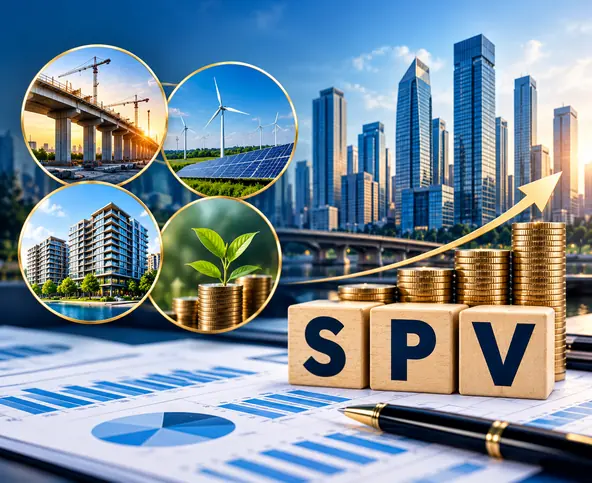
SPV project finance is a financing structure in which a dedicated legal entity is established to develop, own, or operate a particular project. Financing decisions may be based substantially on the project’s expected cash flows, contractual revenues, assets, and associated risks rather than solely on the broader financial position of its sponsors.
This structure is commonly considered for capital-intensive projects that require coordinated investment, long-term contracts, and clearly defined financial responsibilities.
Key Applications of SPV Project Finance
Infrastructure development: SPVs can be established for roads, bridges, ports, transportation facilities, and other infrastructure projects.
Renewable energy: Solar, wind, and other energy developments may use dedicated project entities to organize investment, construction agreements, power purchase contracts, and operating revenues.
Real estate projects: Property developers may create individual SPVs for property acquisitions, development projects, or investment partnerships.
Industrial and commercial projects: Manufacturing facilities, logistics developments, and other large commercial ventures may use SPVs to organize project-specific funding and contractual obligations.
How Does SPV Project Financing Work?
The financing process typically involves defining the project scope, establishing the legal entity, evaluating projected revenues and expenses, securing relevant contracts, and approaching suitable funding sources.
Lenders and investors may assess the project’s feasibility, sponsor experience, capital contribution, collateral, permits, insurance, repayment capacity, and financial projections. Funding is subject to due diligence, negotiation, and the relevant institution’s approval.
What Is SPV Venture Capital?
SPV venture capital refers to the use of a Special Purpose Vehicle to pool capital from multiple investors for a particular venture capital investment or investment opportunity.
Rather than having each investor invest separately in a target company, an SPV may act as a single investment vehicle that acquires and holds an equity interest or another permitted investment.
This arrangement can be useful for startup investments, co-investment opportunities, private company shares, and selected private-market transactions.
Benefits of SPV Venture Capital
- Investment coordination: Multiple eligible investors may participate through one investment entity.
- Defined investment scope: The SPV can be established for a particular company, transaction, or investment opportunity.
- Organized ownership: Investment interests, voting arrangements, and distribution rights can be documented through the SPV’s governing agreements.
- Portfolio flexibility: Sponsors may establish separate vehicles for different investments when appropriate.
- Clearer administration: A properly structured vehicle can centralize certain reporting, recordkeeping, and transaction responsibilities.
SPV venture capital involves investment risk. Returns are not guaranteed, investments may be illiquid, and the SPV’s structure may involve management fees, legal expenses, tax considerations, and securities-law obligations. Investors should review the offering documents and obtain independent professional advice before committing capital.
How Does Special Purpose Vehicle Project Finance Work?
The process for establishing and financing an SPV varies according to the project, jurisdiction, and proposed funding source. The following steps provide a general overview.
1. Project Assessment
Define the business objective, investment requirements, project timeline, expected revenue, estimated costs, and potential risks. Determine whether a separate legal entity is appropriate for the proposed activity.
2. SPV Formation and Legal Structuring
Establish the entity under the applicable jurisdiction’s laws. Define its ownership, governance, authorized activities, contractual responsibilities, and reporting requirements with the assistance of qualified legal and tax professionals.
3. Financial Feasibility and Documentation
Prepare a business plan, financial projections, cash-flow model, project agreements, and supporting corporate documents. Depending on the transaction, additional information may include permits, asset valuations, construction contracts, and evidence of sponsor equity.
4. Funding Strategy
Evaluate potential funding sources, including sponsor equity, institutional lending, private investors, venture capital, and other suitable financing arrangements. The choice depends on the project’s risk profile, repayment capacity, and investment objectives.
5. Due Diligence and Compliance
Relevant lenders, investors, and financial institutions may conduct know-your-customer checks, anti-money-laundering reviews, sanctions screening, ownership verification, and financial and legal due diligence.
6. Funding Approval and Execution
The proposed financing is reviewed against the funding provider’s eligibility criteria and transaction requirements. If approved, the parties finalize the applicable agreements, satisfy closing conditions, and execute the funding arrangement.
The establishment of an SPV alone does not guarantee project financing. Each funding source applies its own underwriting, legal, and compliance requirements.
How to Evaluate SPV Financing Options
Before selecting a financing structure, project sponsors and investors should carefully assess the proposed arrangement.
Consider the following factors:
- Legal structure: Confirm the SPV’s jurisdiction, ownership, permitted activities, and obligations.
- Financial feasibility: Evaluate projected cash flows, funding requirements, debt-servicing capacity, and potential downside scenarios.
- Funding source: Verify the identity, credibility, eligibility requirements, and authority of prospective lenders or investors.
- Documentation: Review incorporation records, financial statements, contracts, investment agreements, and other relevant records.
- Risk allocation: Understand who is responsible for project costs, repayment obligations, guarantees, and potential losses.
- Costs and fees: Identify formation expenses, professional fees, transaction costs, interest, management charges, and other applicable expenses.
- Regulatory compliance: Consider corporate, tax, securities, banking, and reporting requirements relevant to the transaction.
Independent legal, accounting, and financial advice can help identify potential issues before contractual commitments are made.
SPV Finance and Structured Financial Transactions
Special purpose vehicles may also form part of broader structured financing arrangements. Depending on the transaction, an SPV may hold specific assets, enter into financing agreements, receive investment capital, or manage contractual cash flows.
Some project sponsors also investigate bank instruments, guarantees, and other forms of credit support when assessing funding options. The suitability of any instrument depends on the transaction structure and the requirements of the relevant issuing institution, lender, or beneficiary.
A Standby Letter of Credit (SBLC), for example, is a contingent bank undertaking subject to its terms and conditions. It is not cash by itself and does not automatically provide financing to an SPV. Any proposed use of an SBLC or bank guarantee must be independently verified and accepted by the relevant financial institution.
Businesses should obtain written confirmation of applicable conditions and avoid relying on claims of guaranteed financing, guaranteed monetization, or assured investment returns.
Why Choose a Professional SPV Financial Structuring Approach?
A well-planned SPV structure can help sponsors and investors organize project ownership, define responsibilities, and present a clearer financial framework to prospective funding partners.
The value of the structure depends on its commercial purpose, legal documentation, financial feasibility, and implementation. Professional support may help businesses assess different financing models, identify documentation requirements, coordinate due diligence, and understand the contractual obligations associated with a proposed transaction.
Whether the objective involves SPV project finance, special purpose vehicle finance for an asset acquisition, or SPV venture capital for a private investment, careful planning and independent verification remain essential.
Contact SBLC Providers to discuss your transaction requirements and explore the general considerations involved in structured financial arrangements.

FAQ’s
Frequently Asked Questions
Browse our most common questions about fees, identification, mobile services, and legal
requirements.
Special purpose vehicle finance is a funding arrangement organized through a separate legal entity established for a specific project, asset, or investment. Depending on the structure, the SPV may obtain capital through equity, loans, private investment, or other suitable financing sources.
SPV project finance generally involves establishing a dedicated entity for a project, developing financial projections, arranging project contracts, and seeking suitable funding. Lenders and investors evaluate the project’s feasibility, expected cash flows, risks, documentation, and repayment capacity before deciding whether to provide funding
Traditional corporate finance generally involves funding arranged by an operating company for its broader business activities. SPV finance uses a separate entity for a defined purpose, potentially allowing project-specific assets, obligations, and cash flows to be organized separately. The actual degree of separation depends on the legal, accounting, and contractual arrangements.
SPV venture capital allows investors to pool capital through a dedicated entity to invest in a particular startup, private company, or investment opportunity. The SPV may hold the investment on behalf of its participants under defined ownership and governance arrangements. Investment terms, fees, regulatory requirements, and risks should be reviewed carefully.
An SPV may explore whether a bank instrument or guarantee is acceptable as part of a proposed financing arrangement. However, acceptance depends on the instrument’s terms, issuing institution, lender requirements, transaction structure, and applicable compliance procedures. An SBLC or bank guarantee does not automatically result in financing or monetization.
Requirements vary by jurisdiction, project type, and funding provider. Common documents may include incorporation records, ownership information, business plans, financial projections, project contracts, financial statements, asset information, permits, and KYC documentation. Lenders or investors may request additional due diligence materials before approving a transaction.